Influx Rebel LT vs X2E XORAYA N4000: choosing a CAN data logger for prototype validation
Author note: Vehicle Testing Solutions supplies both X2E and Influx product lines, so there is no need to invent a fake winner here. This comparison uses current public specifications checked on 20 April 2026. The Rebel LT enclosure rating of IP20 was confirmed directly with Influx Technology in May 2026.
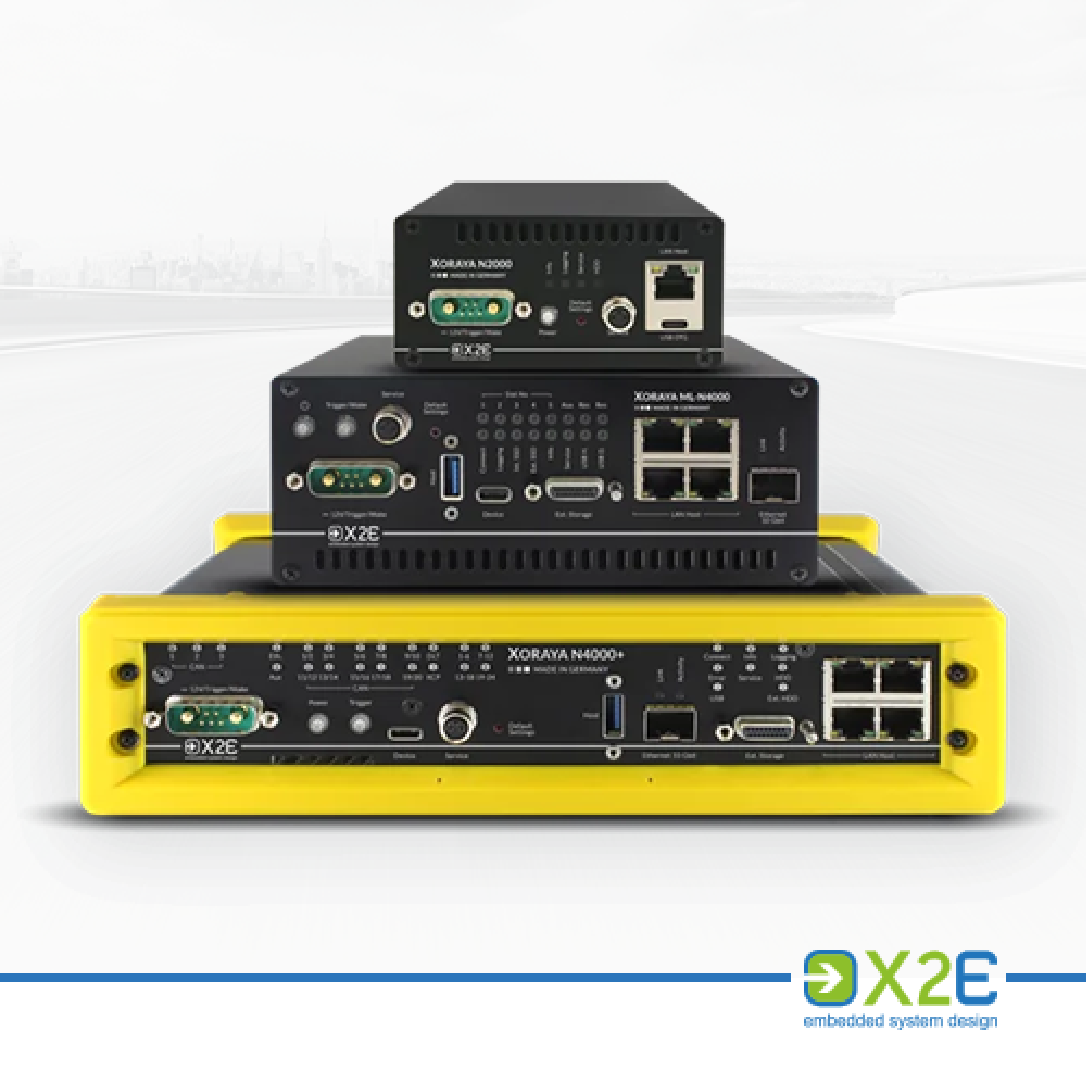
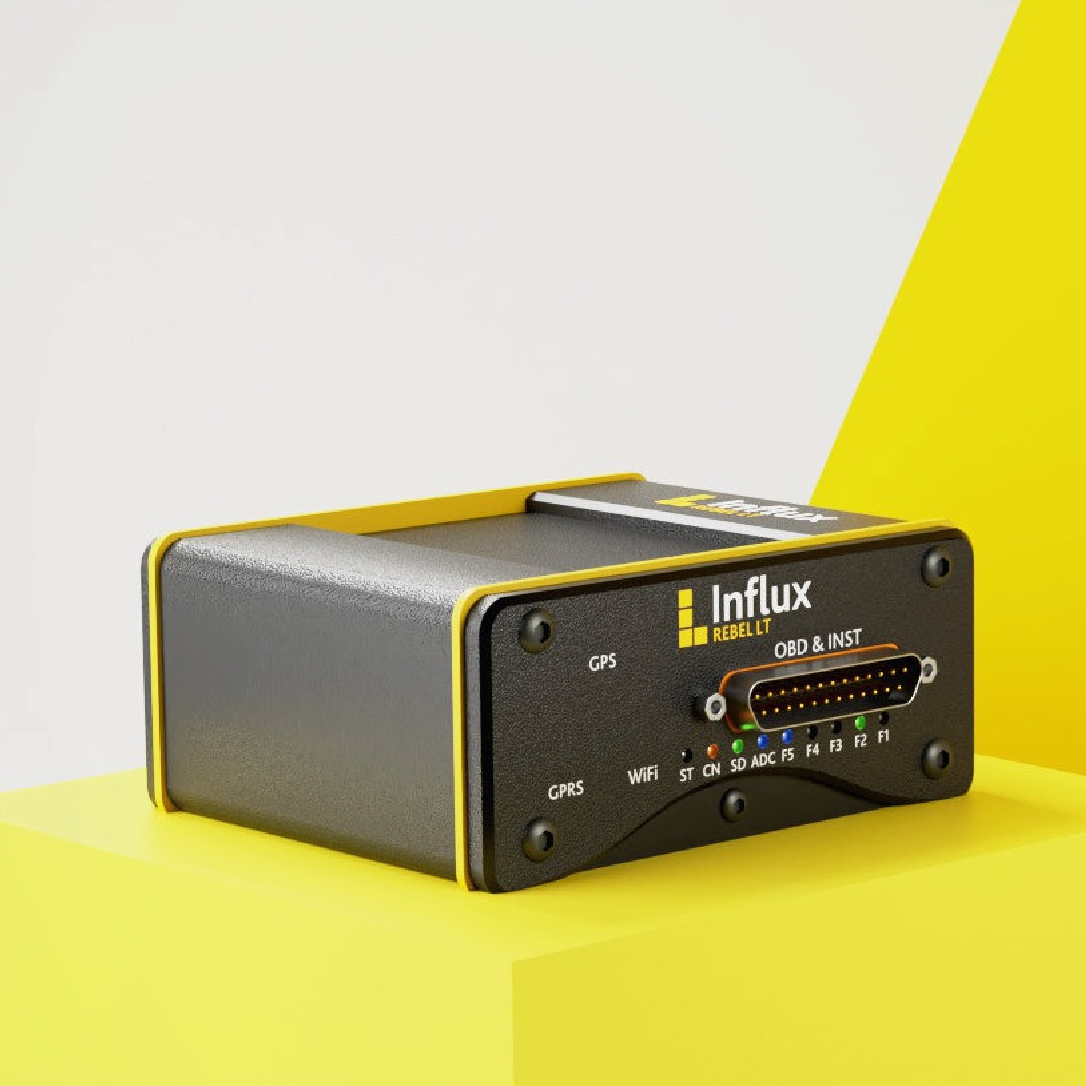
The numbers are blunt. The X2E XORAYA N4000 is published at up to 3 Gbit/s, 480 GB internal storage, up to 8 TB external storage, 100 ns timestamping, and up to 40 HS CAN or CAN FD channels in one published configuration. The Influx Rebel LT is published with 2x CAN 2.0B, 4 analogue inputs, 3 digital I/O, SDHC storage up to 64 GB, WakeOnCAN, and a 400 g enclosure. That is not a straight fight. It is a deployment choice. [1][2][3][4][5][6]
Pick the Influx Rebel LT when the brief is low-channel, low-power, vehicle-resident CAN logging and you want fast fitment, simple setup, and minimal hardware overhead. [1][2][4]
Pick the X2E XORAYA N4000 when the brief includes CAN FD, FlexRay, Ethernet, configurable interface growth, external storage, or lab-grade multi-bus capture at scale. [5][6]
Do not call the Rebel LT a CAN FD logger. Its current public spec says 2x CAN 2.0B, max 1 Mbit/s. [1][4]
The Rebel LT enclosure is IP20, confirmed directly with Influx. That makes it a cabin-installed CAN logger, not a weather-exposed field unit. Specify the install location accordingly. [3]
The wrong question is “which logger is best”. The useful question is “what signals, what environment, what retention model, and how much growth do I need on this programme”. [1][5][9][10]
Which logger fits prototype validation better?
For most prototype validation teams, the Rebel LT is the cleaner fit for focused in-vehicle CAN work, while the XORAYA N4000 is the cleaner fit for bench, chamber, ADAS, and multi-network jobs that sprawl across channels, protocols, and storage. Neither is “better” in the abstract. One is smaller and simpler. The other is broader and heavier. [1][2][5][6]
The mistake here is buying the logger that flatters the spreadsheet instead of the logger that fits the job. If your programme is mostly two CAN buses, a few analogue lines, event triggers, and a unit you can leave in the vehicle without building half a rig around it, the Rebel LT has a strong case. If your programme starts dragging in CAN FD, FlexRay, RS 232, Gigabit Ethernet, external storage, timestamp discipline, and future interface creep, the N4000 starts to look less like overkill and more like basic planning. [1][2][5]
What do the published specs actually say?
The published specs split these units cleanly. Rebel LT is a compact two-channel CAN logger with analogue and digital I/O, USB setup, SD card logging, WakeOnCAN, and modest power draw. XORAYA N4000 is a configurable multi-bus platform with far higher throughput, far more storage, and a broader protocol ceiling. The spec sheets are not subtle once you line them up. [1][2][3][5][6]
Table 1: Head-to-head published specification comparison
Source: [1], [2], [3], [4], [5], [6].
The takeaway is plain enough. Rebel LT gives you a compact, low-draw, CAN-centred logger with some useful I/O. N4000 gives you a configurable data logging platform with much more bus capacity, storage depth, and protocol range, but it asks for more space, more power, and a more deliberate deployment plan. [1][5]
One spec to read carefully is the Rebel LT enclosure rating. IP20 means protection against solid objects over 12.5 mm but no protection against liquids at all. That confirms the Rebel LT as a cabin-installed CAN logger, suited to protected interior installs rather than damp, dusty, or weather-exposed work. Plenty of validation jobs fit that envelope. Outdoor field rigs, engine bay installs, or moisture-prone chamber positions do not. [3]
Source: Influx Rebel LT technical specifications and X2E XORAYA N4000 datasheet. [1][5]
The N4000 lives in a different class once channel count becomes a real requirement.
Where does the Influx Rebel LT make more sense?
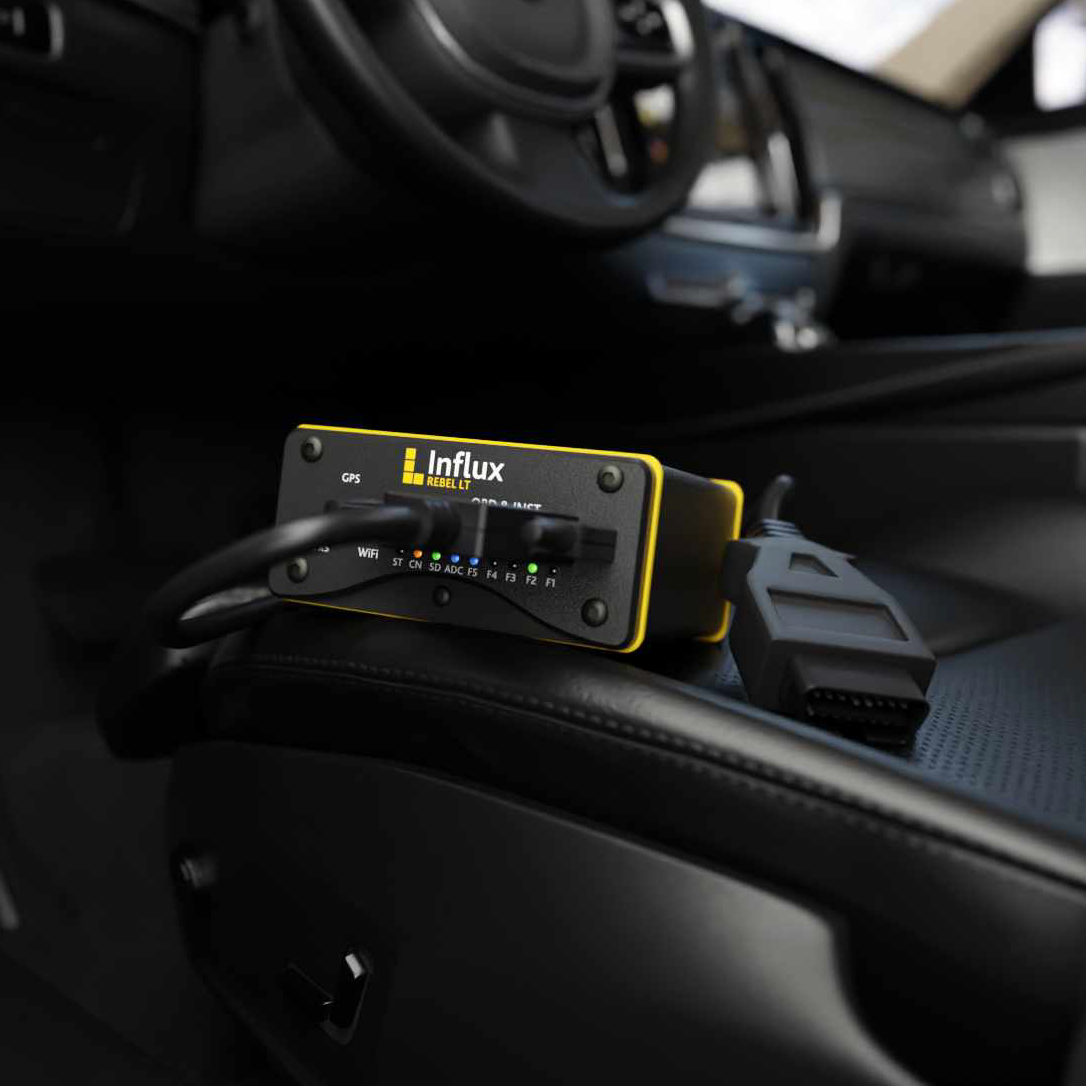
The Rebel LT makes more sense when the logger has to disappear into the vehicle rather than dominate it. Its low operating current, 400 g weight, 4.7 to 36 V supply range, WakeOnCAN, USB configuration, SD card logging, and simple two-CAN layout suit long-duration vehicle logging, quick prototype installs, and jobs where packaging effort matters almost as much as the data. [1][2][4]
That matters more than vendors admit. A logger that takes ten minutes less to fit, draws less current, and does not need a support architecture around it often wins in real vehicle programmes, especially when you are instrumenting multiple prototypes, swapping units between builds, or trying to capture intermittent field faults without turning the cabin into a science project. That is an inference from the published size, current draw, storage model, and WakeOnCAN support, not a line lifted from a brochure. [1][4][9]
The trade-off is equally clear. Public Rebel LT documentation does not give you CAN FD, FlexRay, Gigabit Ethernet, or the kind of interface expansion headroom that modern ADAS and high-bandwidth validation work can chew through without apology. If your programme has already moved past classic CAN capture and light analogue support, the Rebel LT stops being lean and starts being limiting. [1][2][5]
Where does the X2E XORAYA N4000 make more sense?
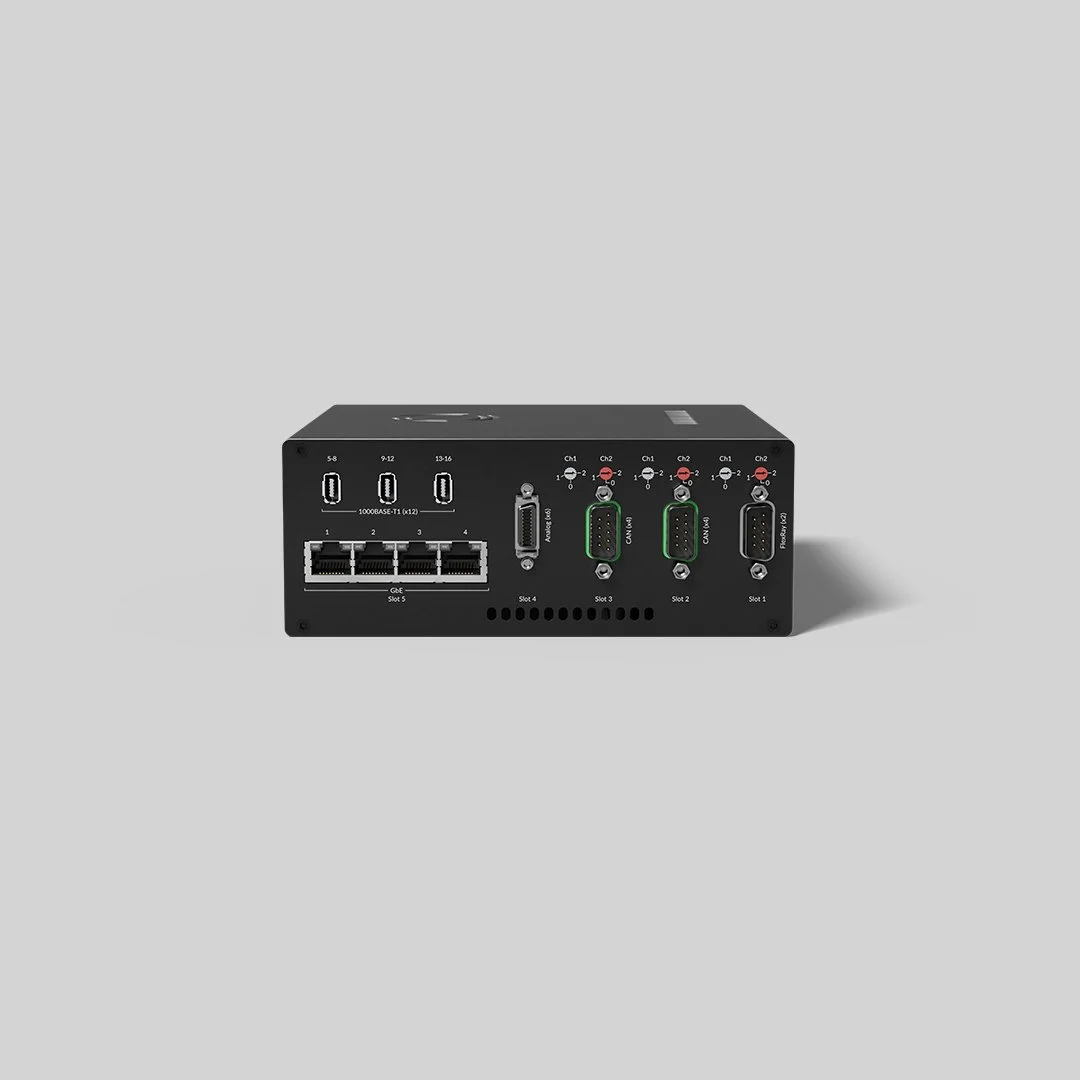
The XORAYA N4000 makes more sense when validation work starts to look like systems integration rather than straightforward CAN logging. Its published strengths are high throughput, configurable interfaces, 100 ns timestamping, large internal and external storage, and support for CAN FD, FlexRay, RS 232, Gigabit Ethernet, and slot-based expansion. That is a bench, chamber, gateway, and high-channel vehicle programme tool. [5][6][7]
It is also the better fit once you care about growth. X2E publishes four configurable slots and multiple interface combinations, including published variants with 20 or 40 HS CAN or CAN FD channels, LIN-heavy builds, and Gigabit Ethernet. That means the N4000 is not really competing with the Rebel LT on simplicity. It is competing on whether your test plan is broad enough to justify that class of hardware. [5][6]
This is where the usual vendor copy falls apart. “High performance” tells you nothing useful on its own. A 2.3 kg logger with active cooling, Embedded Linux, up to 8 TB external storage, and a substantially higher interface ceiling may be exactly right on a lab rig, in an environmental chamber, or in a development vehicle carrying Ethernet and multiple network domains. It may also be unnecessary baggage on a simple CAN job. [5][6][10]
What do vendor pages usually leave out?
They usually leave out the part where the engineer has to live with the deployment. Influx leads with ease and accessibility. X2E leads with scale and capability. Neither opening move answers the questions that matter on Monday morning, such as how much space you have, what power budget you can spare, whether you need CAN FD or Ethernet, how you want to offload data, and whether the next phase of the programme will outgrow the logger you picked too early. [4][5][6]
There is another omission. Public logger pages rarely help engineers distinguish between “vehicle-friendly” and “vehicle-possible”. The N4000 is clearly vehicle-capable, but its size, weight, storage architecture, and interface density push it closer to a mobile systems logger. The Rebel LT is clearly simpler, but at IP20 it is a cabin unit only, so do not upgrade it in your own head from “compact in-vehicle logger” to “weatherproof field unit”. [1][3][5]
The contrarian point is this. Bigger capability is often the wrong answer in prototype validation. Teams do not usually fail because they bought too little theoretical headroom. They fail because the logger is awkward to package, too hungry, too complex for the actual capture plan, or so broad that nobody bothered to define the signal list properly in the first place. VTS’s own data analysis guidance makes that point more politely, but the problem is the same. More data usually means more noise unless the objective is nailed down early. [9][10]
Which alternatives belong on the shortlist?
If your shortlist is serious, it should include Vector GL, Kvaser Memorator, and Intrepid neoVI in addition to Influx and X2E. They are not direct like-for-like matches, but they frame the market properly. Vector GL loggers cover vehicle and bench use across CAN, CAN FD, LIN, FlexRay, and Ethernet. Kvaser’s Memorator Pro 2xHS v2 is a compact dual-channel CAN FD logger. Intrepid’s neoVI FIRE 3 pushes hard into multi-network logging with CAN FD, LIN, Ethernet, scripting, and large SD based storage. [11][12][13]
That comparison matters because it stops this piece turning into a two-brand tunnel. If you want small fleet or vehicle logging, Vector’s GL1000 or GL1010 class is relevant. If you want compact dual-channel CAN FD and scripting, Kvaser belongs in the conversation. If you want an aggressive multi-network box with 16 CAN FD channels, Ethernet, Wi-Fi, and SD storage, Intrepid is part of the real engineer’s shortlist. The Rebel LT and N4000 sit in that wider context, and they still separate cleanly by deployment type. [11][12][13]
Which logger fits each deployment scenario?
The cleanest answer is a scenario matrix. It is not glamorous, which is probably why vendor copy avoids it, but it gets closer to a buying decision than another page of adjectives ever will. [1][5][9]
Table 2: Decision matrix by deployment scenario
Source: [1], [3], [5], [6], [9], [10].
The pattern is hard to miss. Rebel LT wins where packaging, simplicity, and low-touch deployment matter. N4000 wins where protocol breadth, throughput, expansion, and storage depth matter. The middle ground is where engineers waste money, because that is where both boxes can be made to work and only one of them truly fits. [1][5]
If your brief says two CAN buses, low power draw, quick install, and leave it in the vehicle, buy the Rebel LT. If your brief says CAN FD, FlexRay, Ethernet, external storage, timestamp precision, and enough channels to make a laptop sweat, buy the XORAYA N4000. The expensive mistake is not picking the cheaper unit. It is picking the wrong class of logger for the deployment you actually have. [1][4][5][6]