Component Testing

Component Testing for ECUs Before Vehicle Integration. Validate module behaviour early with standalone ECU testing. We verify diagnostic response and communication behaviour against defined criteria, so issues are found before they reach the vehicle build.

Validated the component? See how we support full System Integration Testing before vehicle sign-off.
Why issues slip through before integration

ECU behaviour can appear correct in isolation, yet inconsistencies often emerge during vehicle integration. Without structured standalone validation, faults are frequently discovered late in the programme lifecycle.

!

Faults only identified during vehicle build

!

Longer debug cycles across multiple teams

!

Inconsistent diagnostic or communication behaviour

!

Delays to integration and programme milestones

Standalone ECU validation
with defined criteria

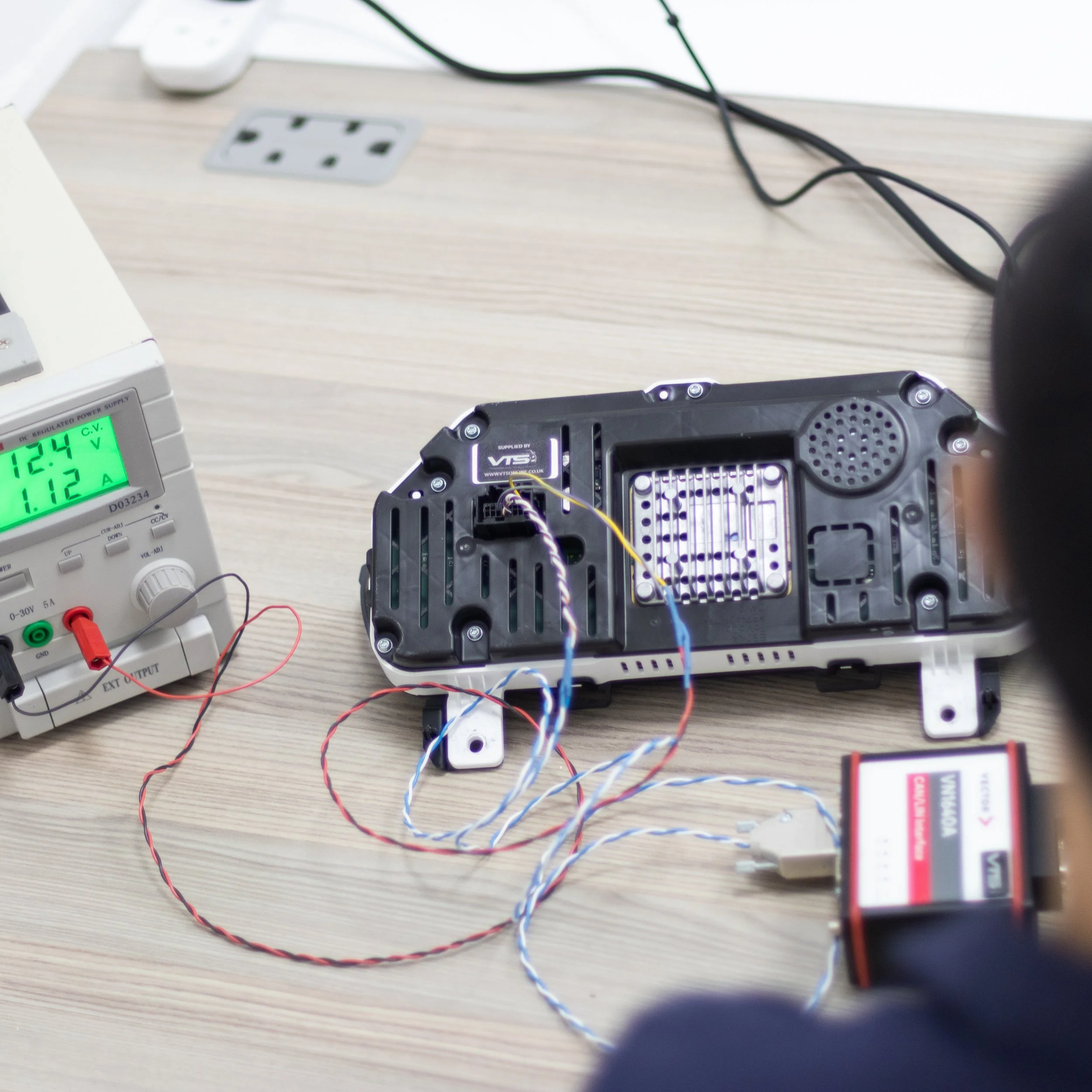
VTS provides precise, standalone ECU testing to validate component behaviour before it’s integrated into a vehicle system. Using custom-built diagnostic scripts and test tools, we verify that each module responds as expected against defined criteria — helping you identify issues earlier and reduce integration surprises.

Standalone ECU validation before vehicle integration

Custom diagnostic scripts and repeatable test routines

Diagnostic response verification against defined criteria

Communication behaviour checks to reduce integration risk

Test scope structured around your programme needs

Clear results to support decisions and sign-off

1

Define scope

Agree ECU variant, interfaces, diagnostic requests and pass/fail criteria.

2

Execute tests

Run repeatable scripted checks to validate behaviour and response.

3

Report results

Provide clear outcomes to support fixes, decisions and programme sign-off.

When required, we can extend validation beyond basic diagnostics to include network behaviour and fault conditions, so edge cases are found early.


  • Fault Tolerance Testing – Simulating Bus Off conditions, network faults, and invalid message patterns to ensure robust communication handling.
  • Quiescent Current Measurement – Measuring standby current to identify parasitic drain issues before they reach the vehicle.
  • Voltage Variation Testing – Evaluating ECU response during over- and under-voltage conditions, such as during cranking or low battery scenarios.
  • Message Timing & Repetition Checks – Ensuring correct CAN message behaviour and compliance with timing tolerances.

Without standalone component testing

  • Issues discovered late during vehicle integration
  • Longer debug cycles across multiple teams
  • Unclear root cause between hardware and system
  • Programme delays and rework

With VTS component testing

  • Earlier fault discovery before vehicle build
  • Clear validation against defined criteria
  • Faster root cause identification
  • Smoother integration and sign-off

If you need to validate an ECU before integration — or you’re seeing inconsistent behaviour that’s difficult to reproduce — we can help define the scope and run a structured, repeatable component test plan.

Speak to an Engineer

Frequently Asked Questions

Common questions about standalone ECU and component-level validation.

Can you test an ECU before the full vehicle system is available? +
Yes. Component testing is designed to validate ECU behaviour before integration, allowing faults to be identified earlier in the development cycle.
What does component testing typically cover? +
It typically includes diagnostic response validation, communication behaviour checks, and confirmation against defined performance criteria agreed at the start of the programme.
Can you help define the test scope? +
Yes. If you can outline expected ECU behaviour and programme requirements, we can help structure a practical and repeatable validation plan.
What information is needed to begin testing? +
Typically we require the ECU/module, interface details, relevant diagnostics, and defined pass/fail expectations. We can assist if any inputs are still being finalised.
Do you provide outputs suitable for programme reporting? +
Yes. We provide clear validation results that support decision-making, follow-up actions, and programme sign-off discussions.
When should component testing be used instead of system integration testing? +
Component testing is best used when validating individual modules before integration. System integration testing becomes relevant once multiple ECUs interact within the vehicle architecture.

Related Products…